
Table of Contents
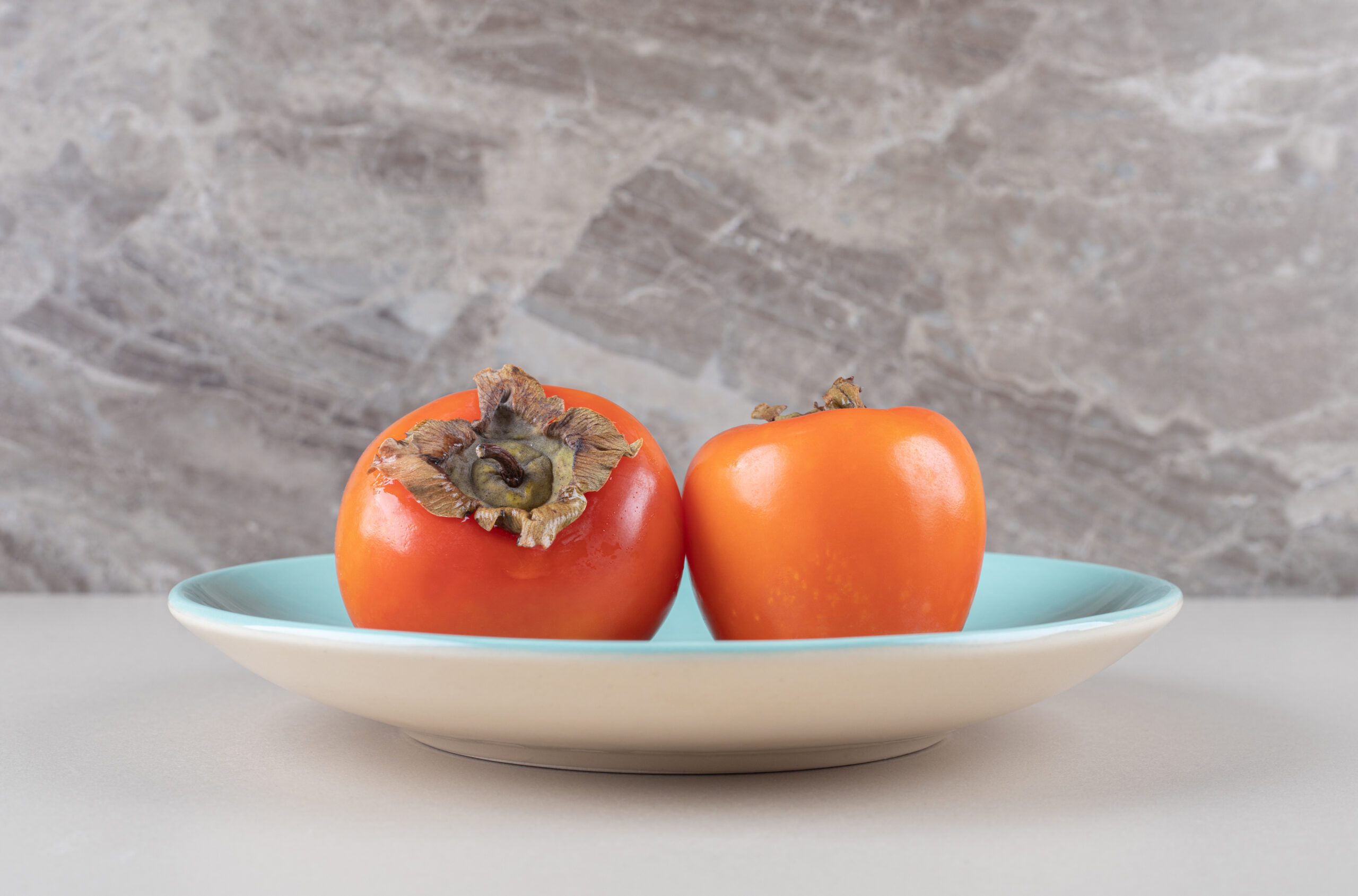
Autumn is the perfect time to add persimmons, an unusual fruit, to your healthy diet. While not as well known as apples or pumpkins, persimmons have an incredibly rich history, flavor profile, and nutritional content that can make you want to incorporate them into your fall and winter diets. At the same time, the color of the fruit is beautiful in the changing colors of autumn, and they bring light to the dark days of winter. Let’s discover why persimmon fruit benefits should be on your fall and winter wellness checklist!
Persimmon Taste
Describing the taste of a persimmon requires poetic thought. The flavor of a Fuyu persimmon can only be described in the highest eloquence when it is fully ripe. A ripened Fuyu is crisp and full of the sweet and spicy flavors of honey, and a crunchy texture.
The flavor and texture of a ripened Hachiya is similar to that of a fully ripe apricot, but when it is fully ripe, its flesh is like that of a custard and is often used as pudding because it is so sweet and rich. It is a decadent dessert and still healthy. Due to its unique flavor profile, the Hachiya is also used in cooking both sweet and savory dishes.
Persimmon Nutrition
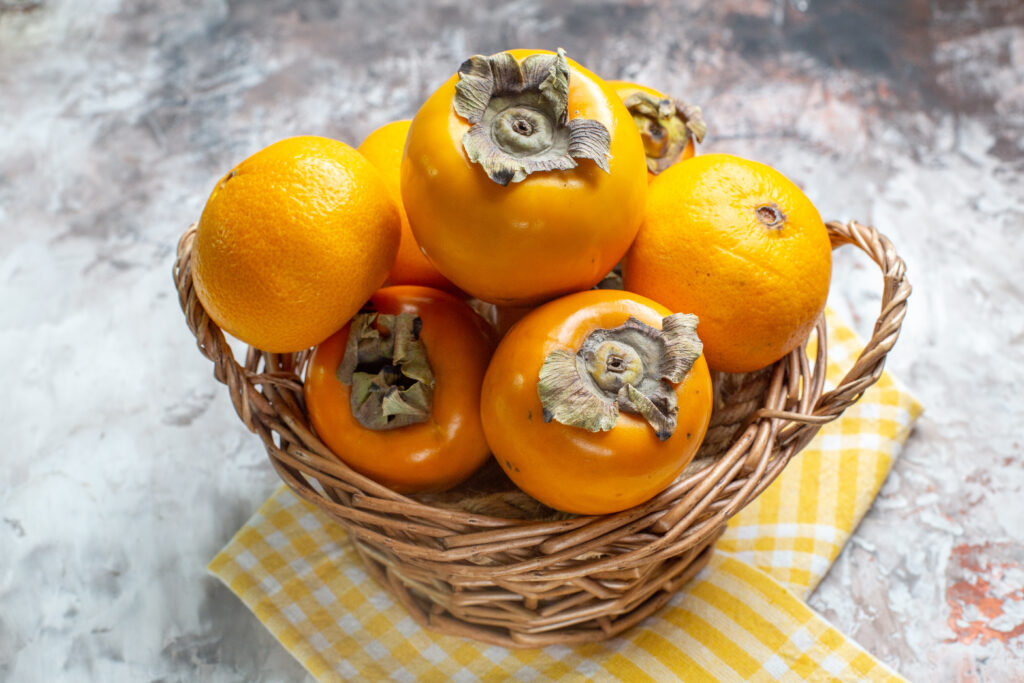
The benefits of persimmons are due to the impressive nutritional value of persimmons. A medium-sized persimmon (168 grams) contains about:
- Calories: 118
- Fiber: 6 grams (a whopping 21% of your daily needs)
- Vitamin A: 55% of the RDI (primarily as beta-carotene)
- Vitamin C: 22% of the RDI
- Manganese: 30% of the RDI
- Vitamin B6, Vitamin E, Vitamin K, Potassium, and Copper: In smaller, but valuable amounts.
They also contain many other plant compounds including flavonoids, tannins (especially an astringent type), carotenoid antioxidants, including beta-carotene, lutein and lycopene. These compounds combine to create an array of persimmon fruit benefits.
Read these fruits nutrition and benefits- Custerd apple, Wood apple, Water apple, Rose apple, Ice apple, Star fruit, Pineapple, Magosteen, Rambutan, Avocado, Longan fruit, Lychee, Prickly pear, Water chestnut, Durian fruit…and more in health-icon.com.
Persimmon Fruit Benefits
Let us take a look at what tangible and beautiful ways this fruit helps you be healthy other than shown numerically persimmon fruit benefits.
Antioxidants Shield your Cells: Persimmons fruit benefits are a rich source of antioxidant compounds such as vitamin C, flavonoids and Carotenoids. These compounds fight off oxidative stress from harmful free radicals, which are unstable molecules that may cause cell damage and result in chronic disease and the effects of aging.
Promotes Heart Health: The combined benefits of 3 powerful nutrients found in persimmon fruit benefits offer considerable heart health support. The fibre content found in persimmon fruit benefits assists in lowering the levels of harmful “bad” LDL cholesterol, and potassium helps to regulate blood pressure and reduce the risk of high blood pressure. They also have the ability to stop the oxidation of cholesterol, which is one of the key steps in forming plaque on the arterial walls.
Natural Vision Protector: Persimmon fruit benefits contain high levels of zeaxanthin and lutein, two carotenoids that are important for maintaining eye health. The high orange colour of persimmon fruit benefits are a strong indicator of their value as a natural form of sunblock that is placed on your retina. In addition, studies have shown that these carotenoids are associated with a lower risk of developing age-related macular degeneration (AMD).
Improves Digestive Health: With 6 grams of dietary fibre per persimmon, they are a great source of dietary fibre for improving digestive health. Soluble fibre in persimmon fruit benefits feeds the beneficial bacteria in your gut and can help relieve constipation. In addition, astringent, unripe persimmon fruit benefits are traditionally used for treating and reducing diarrhoea through the use of tannins.
Fight Inflammation: Chronic Inflammation is the origin of many disease states. Anti-Inflammatory Agents found within Vitamin C, Flavonoids, and Carotenoids have potent effects that promote systemic inflammation reduction throughout the body through their ability to reduce inflammation.
Support the Immune System: Each persimmon fruit benefits contains more than 20% of your total vitamin C daily requirement, which is an important nutrient needed for the effective functioning of the immune system. Vitamin C stimulates the synthesis of white blood cells and protects those cells from injury during an immune response.
Healthy Skin: Antioxidants that support and protect cells internally are also important for healthy skin. Vitamin C contributes to collagen production, a structural protein that keeps skin elastic and looking youthful. The conversion of beta-carotene to vitamin A promotes cell repair and turnover.
Potential Role in Cancer Prevention: No specific food can contribute to the prevention of cancer; however, an antioxidant-rich diet is protective against cancer. Unique compounds present in persimmon fruit benefits, gallocatechin and tannin (shibuol), have demonstrated promising anti-tumour activity in vitro; however, further studies on human populations are necessary to determine their true potential.
Promote Weight Control: Persimmon fruit benefits are very low-calorie and high-fiber foods that are full of water and provide significant satiety. The presence of fiber leads to slower digestion, which keeps you feeling satisfied longer and reduces overall daily caloric intake.
Promote Healthy Metabolism: Due to the presence of fiber, the body can regulate blood glucose levels, as dietary fiber helps slow the absorption of sugars into the bloodstream. Also, the leaves of the persimmon plant (commonly used to make tea) contain several different compounds that have been found to improve insulin sensitivity.
Persimmon Tree
Let’s take a moment to celebrate where persimmons get their start before getting into the taste of this wonderful fruit! Persimmons grow on trees of the Diospyros family and the word Diospyros comes from a Greek term that means divine food or food from the gods. It is therefore quite appropriate for such an incredible fruit to receive such a distinguished name. While there are hundreds of different varieties, only two types are commercially produced:
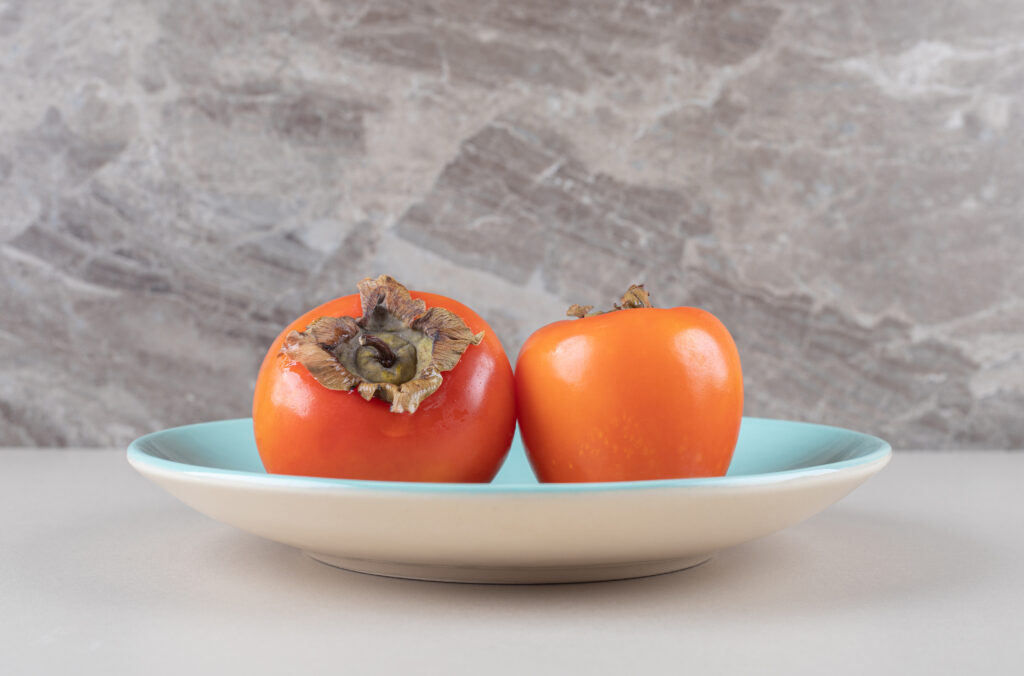
• Fuyu: Fuyus have a round, short, tomato-like appearance and are non-astringent in nature. Fuyus can be consumed while still firm and orange-colored, similar to how one eats an apple.
• Hachiya: Hachiya’s have a more pronounced acorn shape and are much larger than Fuyus. Hachiyas have high levels of astringency, and can only be eaten when fully ripened to jelly-soft consistency (think of them as a water balloon at the verge of bursting open). It is not advisable to consume an unripe Hachiya due to the high tannin levels, which will leave your mouth feeling extremely dry, resulting in a “puckering” sensation.
In summer, these trees display a rich green foliage; in spring, they bloom with the fragrant bell-shaped flowers; and even without their leaves in the fall, they offer a dramatic display with their beautiful iridescent fruits dangling from bare branches against the dull gray clouds.
How to Eat Persimmon Fruit
Once you know a little about how to navigate Fuyu (a firm tomato-shaped persimmon) and Hachiya (a soft acorn-shaped persimmon), here are some tips:
For the Fuyu(firm, tomato-shaped): You should wash it under cool running water, as well as eat the skin. You can either eat it with or without the skin. (It is thin and delicious!) After rinsing, cut off the leafy part (calyx) from the top and then cut/ slice into either wedges, slices, or dice, etc. Fuyu persimmons are excellent for crisp salads, salsas, or eaten raw.
For the Hachiya(soft, acorn-shaped): Wait until your Hachiya is a deep orange color and almost like a water balloon when you squeeze it. The skin will be nearly clear. Wash gently, remove the very top of the Hachiya, and scoop out its delicious jelly-like flesh with a spoon. Note: The skin is generally not eaten once the Hachiya is fully ripe; it should be thrown away. Hachiya persimmons are great for baking, creating smoothies, or using them in place of yogurt with a spoon.
Tip: To speed up the ripening of astringent Hachiya persimmons, put them in a paper bag with a banana or apple for 1 – 2 days. The ethylene gas released will induce faster ripening.
Persimmon Recipes
Cook with this fruit because of its versatility.
• Fresh and Simple: You can eat them fresh sliced on top of your favorite kale salad with goat cheese, walnuts, and balsamic vinaigrette.
• Baked: The pulp of ripe persimmons can be added to muffins, breads, or even persimmon pudding (a traditional holiday dessert).
• Smoothies: Combine one ripe Hachiya persimmon with a frozen banana, Greek yogurt, a sprinkle of cinnamon, and some almond milk for a milkshake packed with vitamins.
• Savory: Spread whipped feta cheese on a toasted baguette, add a slice of prosciutto, and finish off with a slice of fresh Fuyu to create a fancy appetizer.
• Natural Dessert: Simply take one ripe Hachiya and spoon it over vanilla ice cream or Greek Yogurt for a quick and easy gourmet dessert.
Persimmon Side Effects
Most people can enjoy and get a lot of health benefits from eating persimmons, but you should keep in mind two things before you eat persimmons:
1) Be mindful of Tannins (Persimmon Bezoars) – Rarely, eating a large number of unripe or too many astringent persimmons (especially when eaten by themselves, on an empty stomach) can cause a person to develop a “bezoar” (a solid mass in their intestinal tract). This is an extremely unusual occurrence and occurs only when someone eats a lot of unripe, astringent fruit. The easiest way to avoid this is to ensure that your astringent persimmons (Hachiya) are completely and fully ripe before consumption.
2) Allergies – As with many types of food, allergies are possible to develop but are rare. If you have an established allergy to anything in the Ebenaceae family, you should be careful when consuming persimmons.
In summary, consuming ripe persimmons is a great addition to a well-rounded diet but should be done in moderation due to the potential of the risks mentioned above, which can easily be avoided through proper preparation and handling of persimmons.
Read these fruits benefits- Amla, Sugarcane, Guava, Grapes, Passion fruit, Pear, Bael, Dragon fruit, Apricot, Peach, Plum, Chiku, Kiwi, Papaya…and more in health-icon.com.
Conclusion
The persimmon is not only a unique fall decor item; it is also one of the best examples of nature’s incredible ability to give us healthy food in a very enjoyable way. There are many advantages to eating the “fruit of the gods”: it protects the heart and eyes, soothes the stomach, and satisfies the craving for something sweet. This autumn, break out of your usual apple and pear rut and find the glowing orange colour of a persimmon. Once you try this unusual tasting fruit, you will discover the richness of nutrients it contains and how they can help you nourish your body as well as satisfy your taste buds.
Comment below if you have tried persimmons or what you love doing with this wonderful fruit!
Disclaimer: The information provided on this website is for general educational and awareness purposes only. It should not be considered a substitute for professional medical advice, diagnosis, or treatment. Always consult your doctor or a qualified healthcare professional before making any changes to your diet, medication, or health routine. The author and website are not responsible for any outcomes resulting for the use of this information.
FAQs
Is it OK to eat persimmon every day?
Yes, for most people, enjoying one persimmon daily as part of a balanced diet is perfectly fine and highly beneficial. Given their high fiber content, sticking to one per day initially is wise to see how your digestive system reacts. As with any food, variety is key, so rotate it with other fruits.
What is the best time to eat persimmon?
You can enjoy persimmons any time! They make a fantastic morning snack or addition to breakfast for an energy and fiber boost. Some prefer them as an afternoon pick-me-up or a naturally sweet dessert after dinner. Avoid eating large quantities of very astringent, unripe persimmons on a completely empty stomach.
Do you eat the skin of a persimmon?
For Fuyu persimmons (the firm, tomato-shaped ones), the thin, glossy skin is entirely edible and nutritious—just give it a good wash. For Hachiya persimmons (the soft, acorn-shaped ones), the skin is typically discarded once the fruit is fully ripe and spoonable, as it can be a bit tough and bitter.
Are persimmons good for diabetes?
Persimmons have a medium Glycemic Index (GI), but their high fiber content helps slow the absorption of sugar, which can help prevent spikes in blood glucose. However, they do contain natural sugars. Individuals with diabetes should consult their doctor or dietitian, consider portion size (e.g., half a fruit), and pair it with a protein or fat (like some nuts) for better blood sugar control.
6 thoughts on “Persimmons Fruit Benefits: Nutrition & Side Effects”